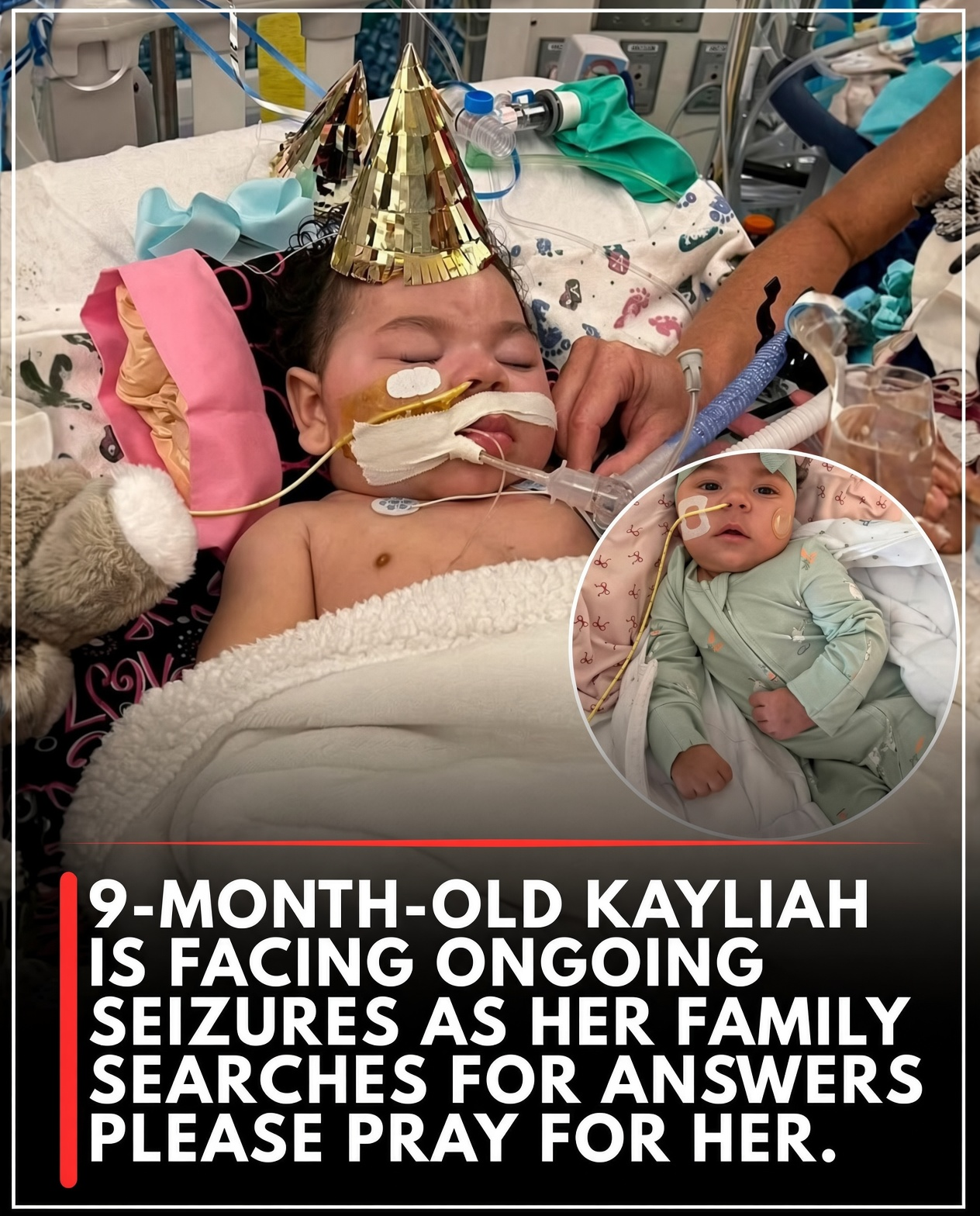
In the quiet, tense spaces between hospital monitors and clinical consultations, a family is rallying around their 9-month-old daughter, Kayliah, as she faces an aggressive, ongoing neurological condition marked by persistent, difficult-to-control seizures.
Despite her young age, Kayliah has already undergone extensive diagnostic evaluations and frequent hospitalizations across multiple medical centers. Medical teams continue to monitor her condition closely as her parents search for specialized pediatric neurologists who can help pinpoint the underlying cause of her complex seizure activity.
A Family Confronts a Second Neurological Battle
For Kayliah’s parents, the medical journey carries a profound emotional weight. In 2023, the family endured the devastating loss of their older daughter, Kalani, who passed away following severe pediatric neurological complications.
Now, facing a second complex neurological crisis with Kayliah, her parents are leaving no stone unturned. They are actively seeking consultations with top regional and national experts in pediatric epilepsy, complex seizure disorders, and rare conditions such as Epilepsia Partialis Continua (EPC)—a rare form of focal status epilepticus characterized by persistent, recurrent motor seizures.
Kayliah’s Clinical Focus & Outreach Pathway:
- Patient Age ──► 9 Months Old
- Primary Symptoms ──► Recurrent, persistent seizure activity & complex neurological signs
- Specialized Focus ──► Pediatric Epilepsy, Epilepsia Partialis Continua (EPC), Rare Neuro-genetics
- Family Objective ──► Connecting with specialized pediatric neuro-epileptology centers
The Search for Answers and Clinical Expertise
Managing severe pediatric epilepsy requires advanced, multi-disciplinary care, often involving specialized neuro-imaging, continuous video electroencephalogram (EEG) monitoring, genetic testing panels, and tailored anti-seizure medication regimens or metabolic therapies.
Navigating round-the-clock clinical care, diagnostic uncertainty, and sleepless nights, Kayliah’s family remains steadfast in their dedication to her health. They are asking the broader medical and advocacy communities to share Kayliah’s story in hopes of reaching pediatric epileptologists, neuro-geneticists, and medical research institutions experienced in refractory pediatric seizure disorders.
Her parents continue to ask for prayers, support, and guidance as they fight to secure clear answers, effective treatment options, and a path toward healing for their daughter.