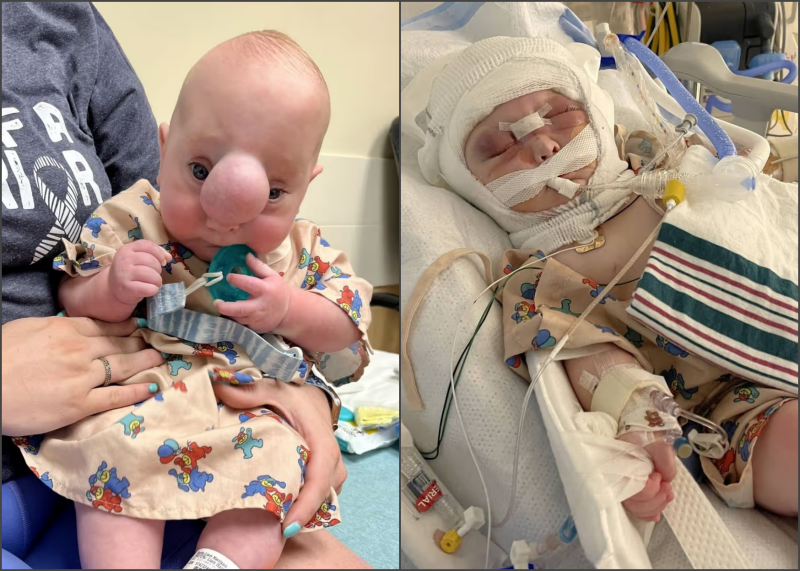
From an abnormal fetal scan to major reconstructive surgeries, toddler Liam Sachs from Cincinnati, Ohio, is proving medical predictions wrong as he achieves milestones once thought uncertain, including walking, talking, and eating independently.
His mother, Hannah Sachs, a 32-year-old research coordinator, shared that despite enduring brain surgery, prolonged NICU stays, and a subsequent cerebral palsy diagnosis, Liam’s adventurous spirit and determination continue to inspire everyone around him.
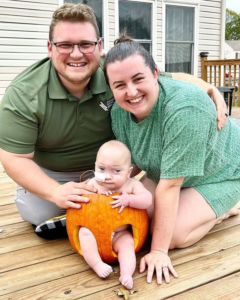
Fetal Diagnosis and Neonatal Complications
The family’s medical journey began during a routine 22-week anatomical ultrasound, which flagged a suspected encephalocele—a rare neural tube defect where part of the brain and surrounding membranes protrude through an abnormal opening in the skull.
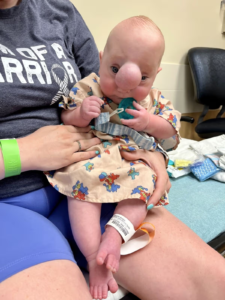
Following months of high-risk fetal monitoring, Liam was delivered two weeks early in March, presenting with a prominent, fluid-filled cranial sac at his forehead. He was immediately transferred to the Neonatal Intensive Care Unit (NICU) for continuous physiological monitoring.
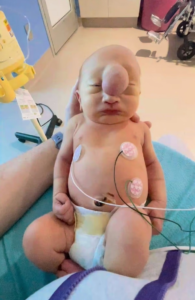
Liam’s Medical & Development Timeline:
- 22-Week Scan ──► Suspected Frontoethmoidal Encephalocele detected
- Birth & NICU ──► Delivered 2 weeks early; 13-day NICU stay with supplemental oxygen
- Month 1 ──► Emergency Ventriculoperitoneal (VP) Shunt placement for acute hydrocephalus
- Month 6 ──► 11-hour Craniofacial Reconstruction & Encephalocele Resection
- Ongoing Care ──► Cerebral Palsy diagnosis; Intensive multi-disciplinary therapies
Emergency Interventions and 11-Hour Craniofacial Reconstruction
After 13 days in the NICU, Liam was discharged home with supplemental oxygen. However, just two weeks later at one month old, he developed acute hydrocephalus—a dangerous buildup of cerebrospinal fluid within the brain’s ventricles. Surgeons performed emergency surgery to place a shunt system to relieve intracranial pressure.
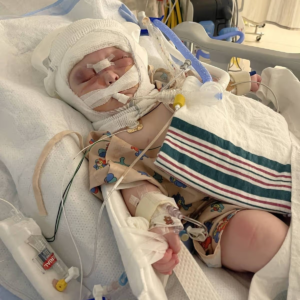
At six months of age, a specialized pediatric neurosurgical and craniofacial team performed a complex, 11-hour operation to:
-
Resect the Encephalocele: Safely isolate and remove the protruding sac while protecting viable brain tissue.
-
Reconstruct the Skull: Perform extensive cranial vault remodeling to repair the bone defect and restore normal skull morphology.
Following the grueling operation, Liam experienced severe post-operative facial swelling that kept his eyes swollen shut for days, requiring round-the-clock comfort and vocal reassurance from his family at his bedside.
Overcoming Cerebral Palsy Through Multi-Disciplinary Therapy
Months after his craniofacial recovery, specialists diagnosed Liam with cerebral palsy after observing developmental delays in movement, muscle tone, and motor coordination.
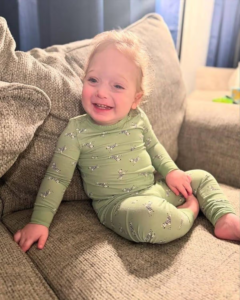
Rather than viewing the diagnosis as a limitation, his family enrolled him in an intensive, multi-disciplinary rehabilitation program featuring:
-
Physical & Occupational Therapy: To build core strength, balance, and fine motor control.
-
Speech & Feeding Therapy: Helping him transition from potential tube-feeding risks to enjoying solid meals orally and speaking clearly.
-
Aquatic & Music Therapy: Supporting sensory integration, mobility, and confidence.
Advertisement
Today, Liam is walking, running, speaking, and exploring playgrounds with fearless curiosity—achieving milestones on his own timeline and demonstrating remarkable resilience in the face of complex medical challenges.