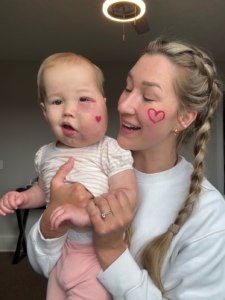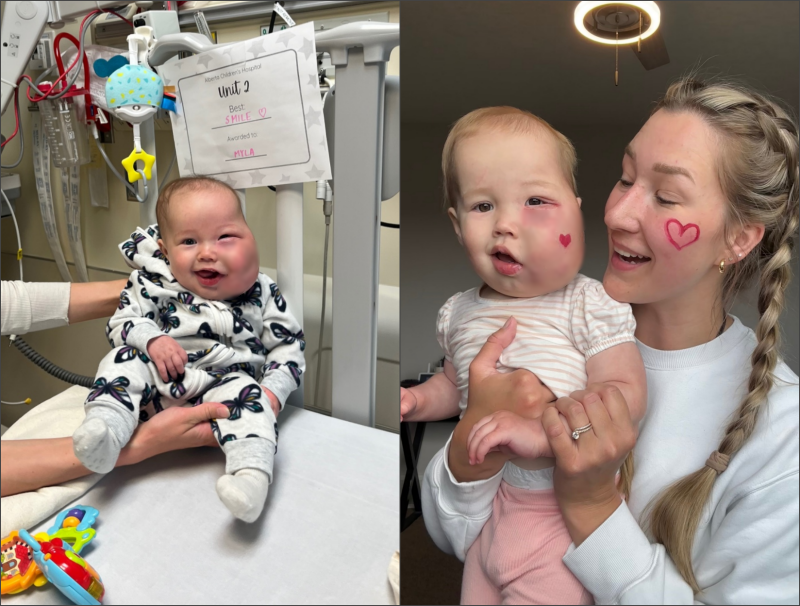
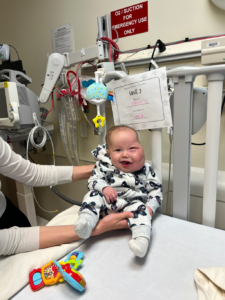
Born in November, toddler Myla Lieskovsky spent the first month of her life receiving specialized care at the Alberta Children’s Hospital Neonatal Intensive Care Unit (NICU) as physicians investigated a significant, rapidly expanding mass on the side of her face.
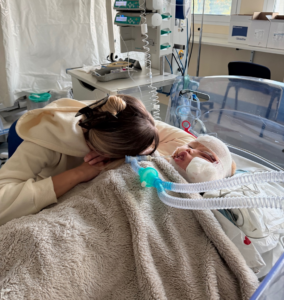
Following extensive diagnostic imaging—including repeated Magnetic Resonance Imaging (MRI) and Computed Tomography (CT) scans—and subsequent specialized genetic testing conducted in Boston, medical teams confirmed a diagnosis of Capillary Malformation-Arteriovenous Malformation (CM-AVM).
Arteriovenous malformations involve abnormal, direct connections between high-pressure arteries and low-pressure veins without an intervening capillary bed, creating high-flow vascular shunts that disrupt normal tissue perfusion and place systemic strain on the cardiovascular system.
Myla's Clinical Profile & Diagnostic Journey:
├── NICU Admission        ──► Extensive MRI/CT imaging for facial swelling at birth
├── Genetic Testing      ──► Confirmed diagnosis of CM-AVM via specialized testing in Boston
├── Severe Symptoms      ──► Daily mucosal bleeding (gums/nose), vision & hearing impairment
└── International Care    ──► Evaluation via Vascular Birthmarks Foundation for surgical treatment
Acute Clinical Symptoms and Hemodynamic Risks
While typical cases of CM-AVM often present as small, superficial skin lesions that enlarge during hormonal transitions (such as puberty or pregnancy), Myla’s case is exceptionally rare due to the massive size and early onset of the malformation in infancy.
The high-flow vascular anomaly causes severe secondary complications:
-
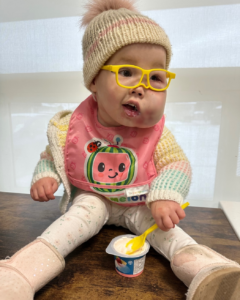
Frequent Hemorrhaging: Myla experiences daily bleeding around her teeth, gums, and nasal passages due to high vascular pressure near mucosal surfaces.
-
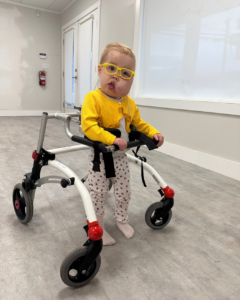
Sensory Deficits: The physical size and altered tissue hemodynamics of the facial mass compromise both her visual and auditory pathways.
-
Cardiovascular Strain: Rapid arterial blood flow through the malformation forces her heart to pump significantly higher blood volumes, raising long-term concerns for high-output cardiac complications.
Seeking Advanced International Surgical Treatment
After consulting with major pediatric centers—including The Hospital for Sick Children (SickKids) in Toronto, which noted a lack of safe conventional surgical options available locally—the Lieskovsky family connected with the Vascular Birthmarks Foundation (VBF) in New York.
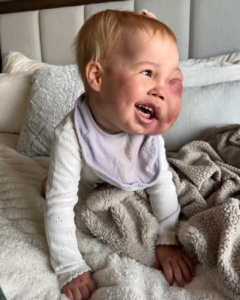
Through the foundation’s global network, the family established a care plan with Dr. Giacomo Colletti, an internationally recognized specialist in complex facial vascular surgeries based in Italy.
Dr. Colletti utilizes modified electro-scleral therapy—a specialized technique combining sclerosing agents with electrical currents to occlude malformed high-flow vessels while minimizing damage to surrounding facial nerves and soft tissues.
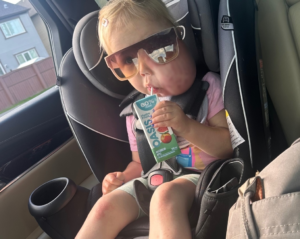
Following a clinical evaluation in New York, the family is preparing to travel to Italy for the specialized operation. To assist with international travel, specialized medical care, and extended recovery costs, a GoFundMe campaign has been established by supporters to assist the Lieskovsky family throughout Myla’s treatment journey.