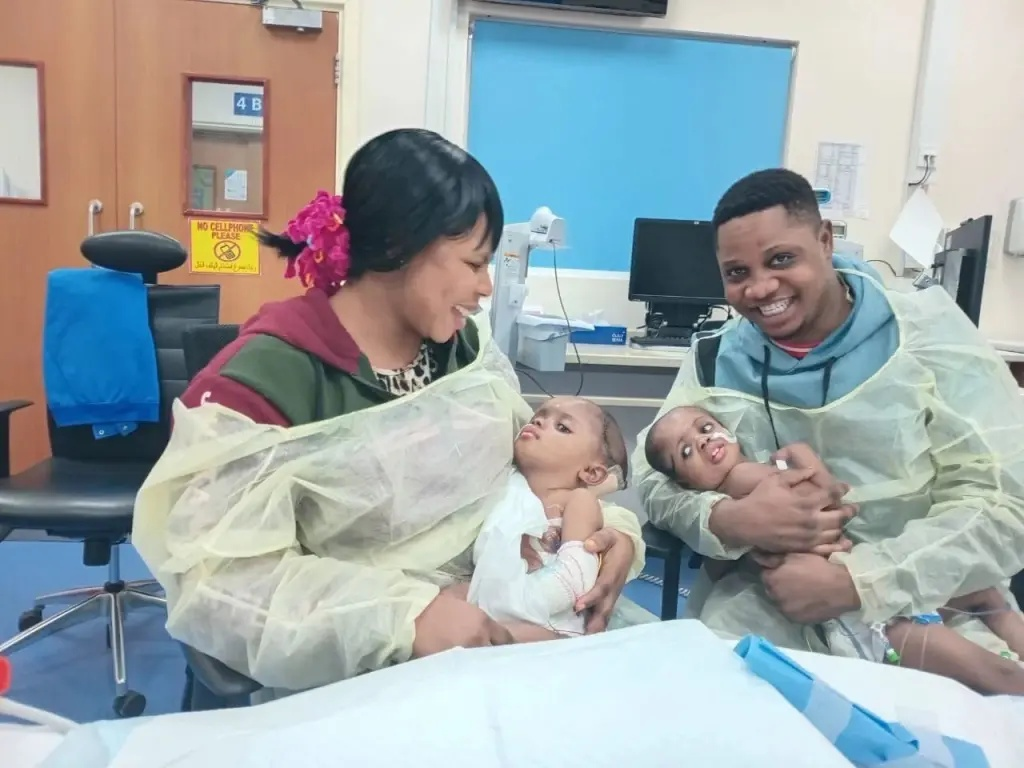
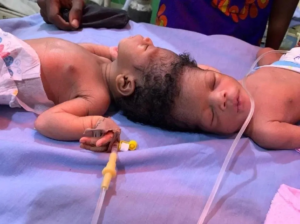
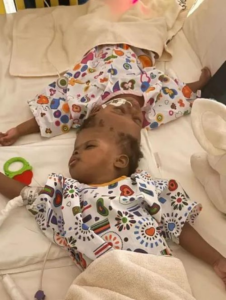
LONDON, UK — Mercy and Goodness entered the world facing extraordinary physical challenges. Born in Nigeria with their skulls fused together, the craniopagus twin sisters shared vital brain tissue and major blood vessels—an incredibly rare condition that occurs in only a tiny fraction of conjoined twins.
When they were just six months old, the girls were referred to a medical team led by renowned pediatric neurosurgeon Professor Noor ul Owase Jeelani, a world-leading expert in separating craniopagus twins. Sponsored by the UK-based charity Gemini Untwined, the family traveled to London, where an elite international medical team began mapping out one of the most complex pediatric surgeries ever attempted.
Months of Digital Simulation and Mapping
The preparation phase took several months of rigorous planning. Utilizing cutting-edge technologies—including artificial intelligence, virtual reality (VR), 3D modeling, and augmented reality (AR)—specialists meticulously mapped the intricate web of shared blood vessels and brain connections. This advanced digital prep allowed the surgical team to simulate and practice every step of the high-stakes procedure before entering the operating room.
The separation was completed across four staged operations over a span of four months, totaling approximately 40 hours of surgery. The monumental effort required the collaboration of more than 60 healthcare professionals representing 20 different countries.
The final and most dangerous phase of the separation was a grueling 12-hour procedure. Against immense medical odds, the surgery was a complete success, and both sisters made a remarkable recovery.
A Bright and Independent Future
Now thriving back home in Nigeria, Mercy and Goodness recently celebrated their third birthday surrounded by family—a milestone that once felt entirely out of reach. Their survival stands as a powerful testament to the impact of international medical cooperation, technological innovation, and human resilience.
Professor Jeelani hailed the separation as a landmark achievement, noting that the combination of team experience and advanced technology was key to giving the girls the opportunity to lead healthy, independent lives.
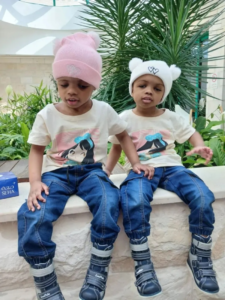
Craniopagus twins are among the rarest congenital anomalies, accounting for only 5% of all conjoined births and occurring in roughly one out of every 2.5 million births. Today, Mercy and Goodness are no longer bound by their condition. Instead, they are two vibrant, joyful young girls ready to experience childhood side-by-side as independent sisters.